English version of 本質ベースで解説 ー日報の書き方が分からない人へー
Hello everyone. I’m Yutaro Kojima, representative of Bulltechs. As the title says, this is a fundamentals-focused article for people who don’t know how to write a daily report.
[What should I actually write in a daily report?]
The internet is very convenient these days — templates for daily reports (and almost everything else) are everywhere.
But using those templates as-is does not necessarily mean you will write well.
Here’s why.
In this article, I organize the essential way to write daily reports based on what I’ve seen across multiple workplaces. It’s surprisingly simple — once you lock this in, writing becomes much smoother.
◎ Clarify the intent behind what you write
⇨ Even within “daily reports,” there are many kinds. For example:
1. A short work log that ends in a sentence
2. A detailed write-up useful for the next day and beyond
3. Something written for people who did not do that work
So even one label — “daily report” — covers very different documents.
But are these all really “daily reports”?
In everyday speech many people use “daily report” broadly, yet there are related terms with different nuances.
A bit more detail...
Diary: a place to freely record not only facts, but also feelings, worries, and personal insights from the day. Unlike daily reports or logs, the nuance is strongly “written for yourself.”
Daily report (日報): a communication tool for sharing that day’s results, progress, and issues with others (teammates, co-founders, investors, etc.).
Daily log / journal (日誌): a database that records what happened in day-to-day operations as objective facts, chronologically or by item. Because events are recorded as they occur, it is usually finer-grained than a daily report.
※ Depending on industry and company culture, “daily report” and “daily log” may be treated as nearly synonymous, or defined by local rules. Treat the above as the author’s inclusive opinion.
Using these definitions, let’s judge what kind of daily report fits from workplace examples. As you read, map your own situation and ask whether the report you are about to write falls into:
1. A list of tasks
2. A history of work execution — or
3. An explanation / report to others
1. A short work log that ends in a sentence (a list of tasks)
⇨ It’s questionable whether this is even a “daily report.” Many such forms exist mainly to make clear who did the work. In that case, manage them simply in monthly batches.
2. A detailed write-up useful later for yourself, partners, or coworkers (history of work execution)
Diary? Daily report? Daily log?
⇨ Fits daily report and daily log.
Who is it for?
⇨ People who already understand / know that work.
What do you write?
⇨ What the flow was before today; what you did today within that flow and what happened; share anything needed for tomorrow’s work — how to move, and information that is (or was) essential to getting the job done — thoroughly.
Example
⇨ In coworking-space opening prep, take fine-grained log data like “called three vendors at XX:XX, visited two furniture shops at YY:YY,” and summarize/abstract it as: “Completed comparative quotes for interior work today. Expected to fit budget, but additional plumbing work is a concern.”
3. Written for people who did not do that work (explanation / report to others)
Diary? Daily report? Daily log?
⇨ Fits both daily report and daily log; a log-style structure may communicate better.
Who is it for?
⇨ People who don’t know the work in detail, people who aren’t assigned to it, managers.
What do you write?
⇨ Usually you write on the assumption that others will check it. If they won’t, type 1 or 2 is enough. “Check” can also mean a review/approval action, so write objective facts — what you did and what occurred — with chronological events added on top of type 2 (work-execution history).
Example
⇨ In boarding-house operations, stack micro events like “10:00 cleaned shared space,” “14:30 vendor delivered supplies,” “18:00 replaced lightbulb in Room A.” Because the grain is fine, the record volume grows.
So what should you do?
So far we’ve organized types of daily reports together with word definitions. Next, with concrete examples, here’s how to structure what you write.
⓪ Basics worth including up front
Obvious, but worth listing:
- Author name
- Members
- Department / work location
- Date
- Work overview
- Special notes / remarks
These are root fields needed in almost any daily-report format.
① When a simple task list is enough
As noted earlier, you only need who worked when and where, so the structure stays extremely compact.
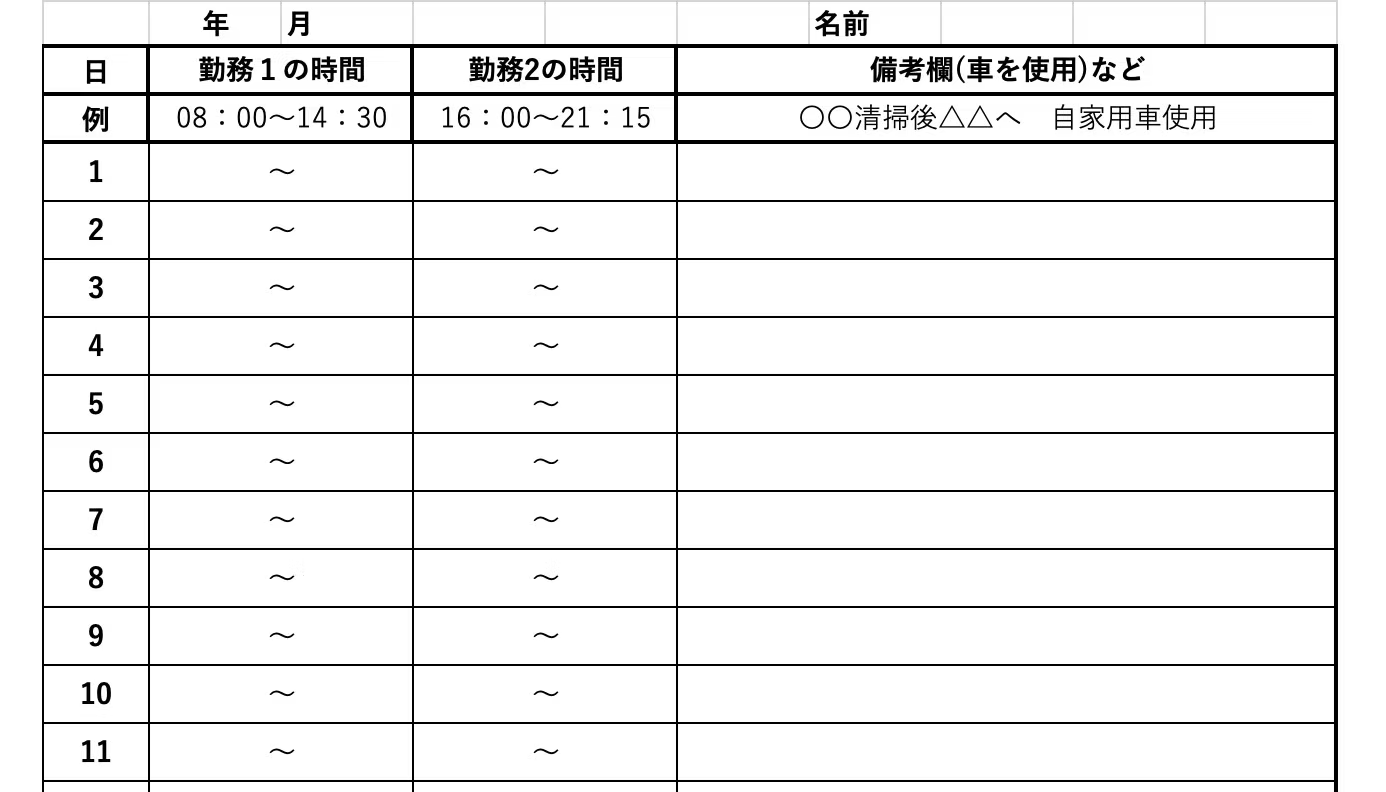
② When you need a history of work execution
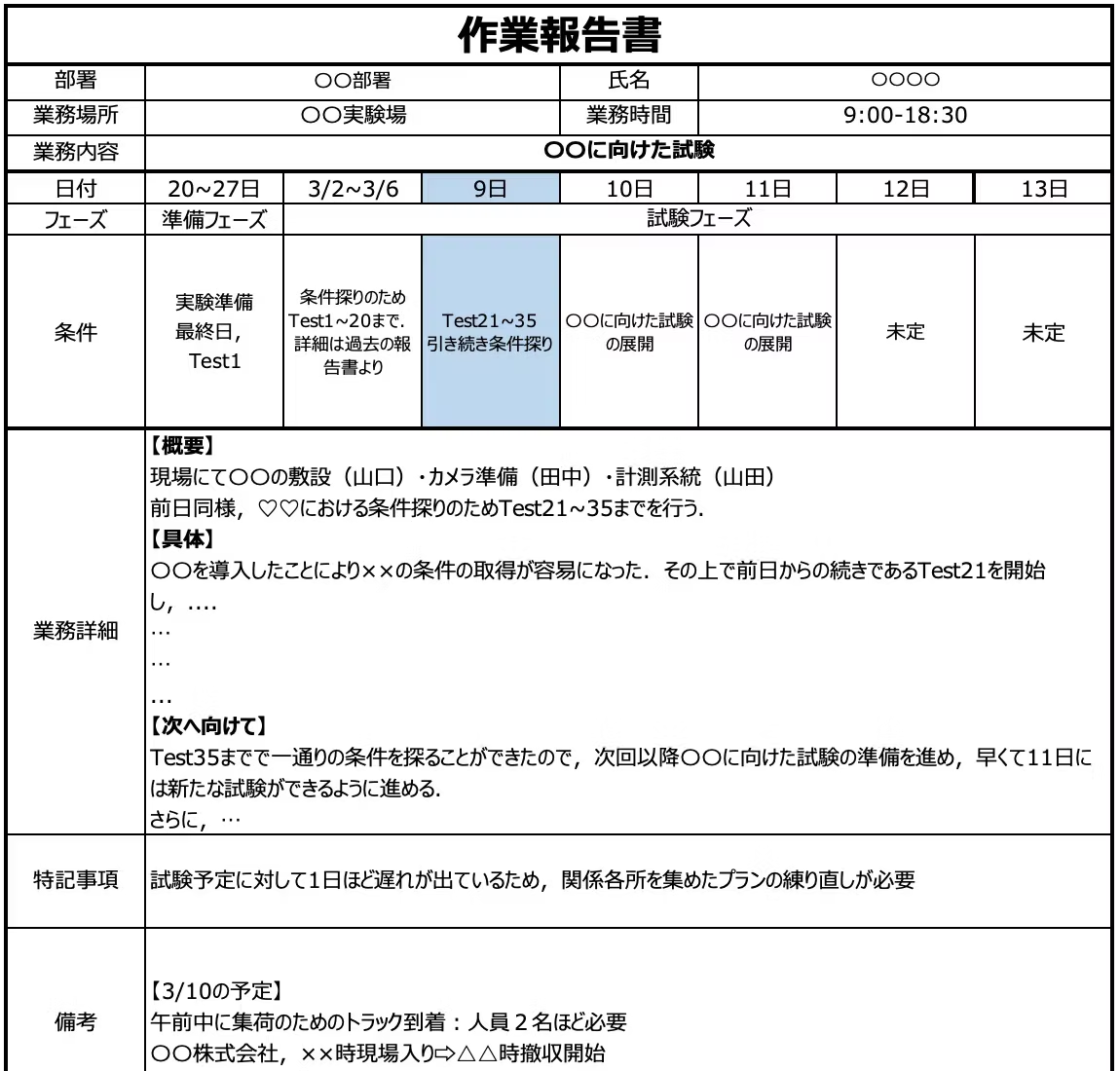
Compared with ① (about one page per month), ② jumps to roughly one page per day and much higher information resolution. In this example, a quick overview of the whole flow matters, so past/future dates with brief events and plans can be noted lightly. Detail fields can be so open-ended that some people spend more time than expected writing the report.
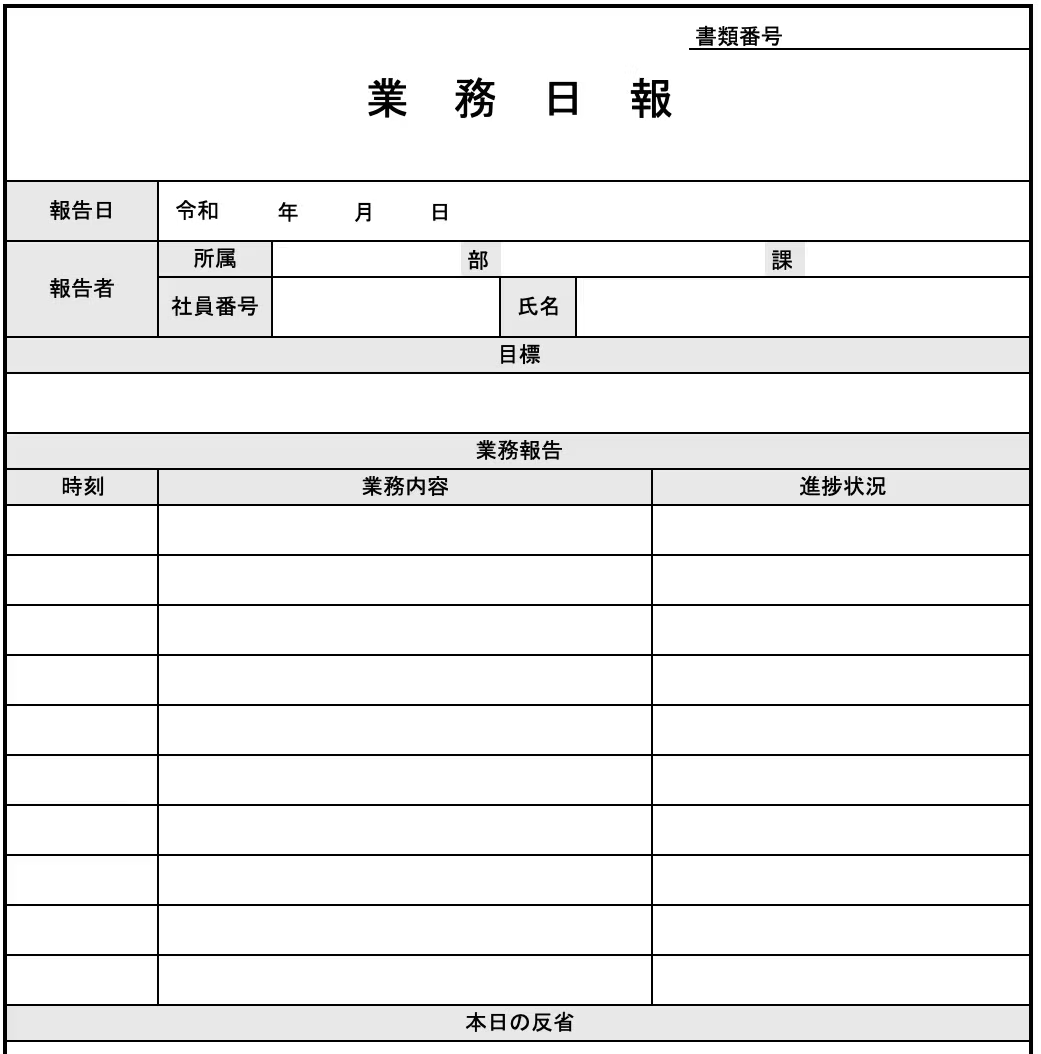
This is a typical work daily-report example. Slots are pre-arranged for writing by time of day, but it may not suit writing in fine detail.
When writing a daily report as a work-execution history, also keep these purposes in mind:
- Sharing progress
- Accumulating know-how
③ Explanation / report to others
③ is usually material for people who do not execute the work directly — especially managers. It can go beyond the usual daily-report / daily-log range. If the external check is light, submitting a type-② report is enough. What I want you to prioritize here is the daily report whose purpose is to be checked by others. On top of work-execution history, the following mixes in:
◎ Will it make sense to someone who doesn’t know that site?
That one point is the whole game. The material must communicate, so text alone is often not enough, and you must watch information volume. Unless the work items are extremely few, avoid cramming a long prose wall onto a single page.
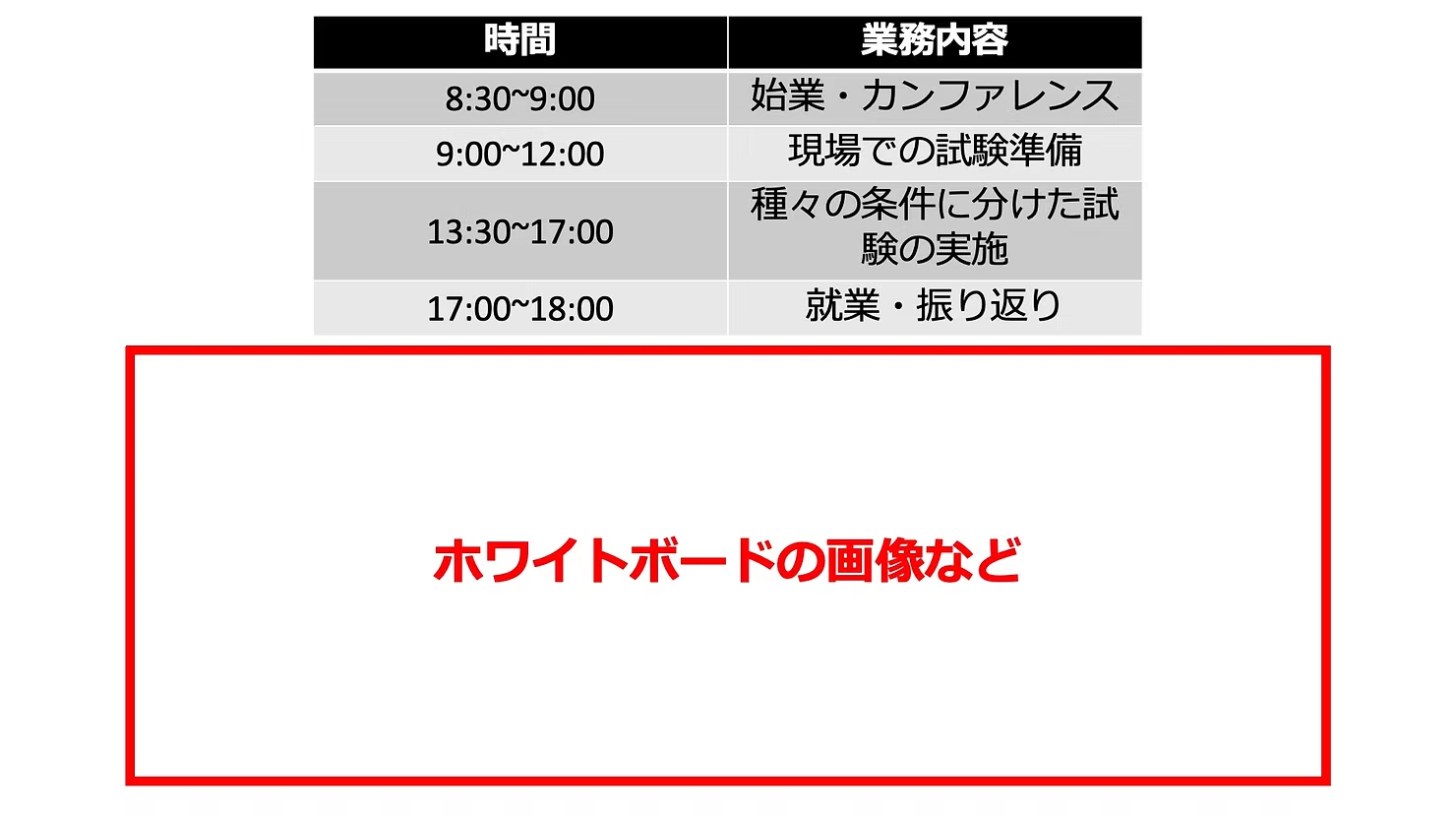
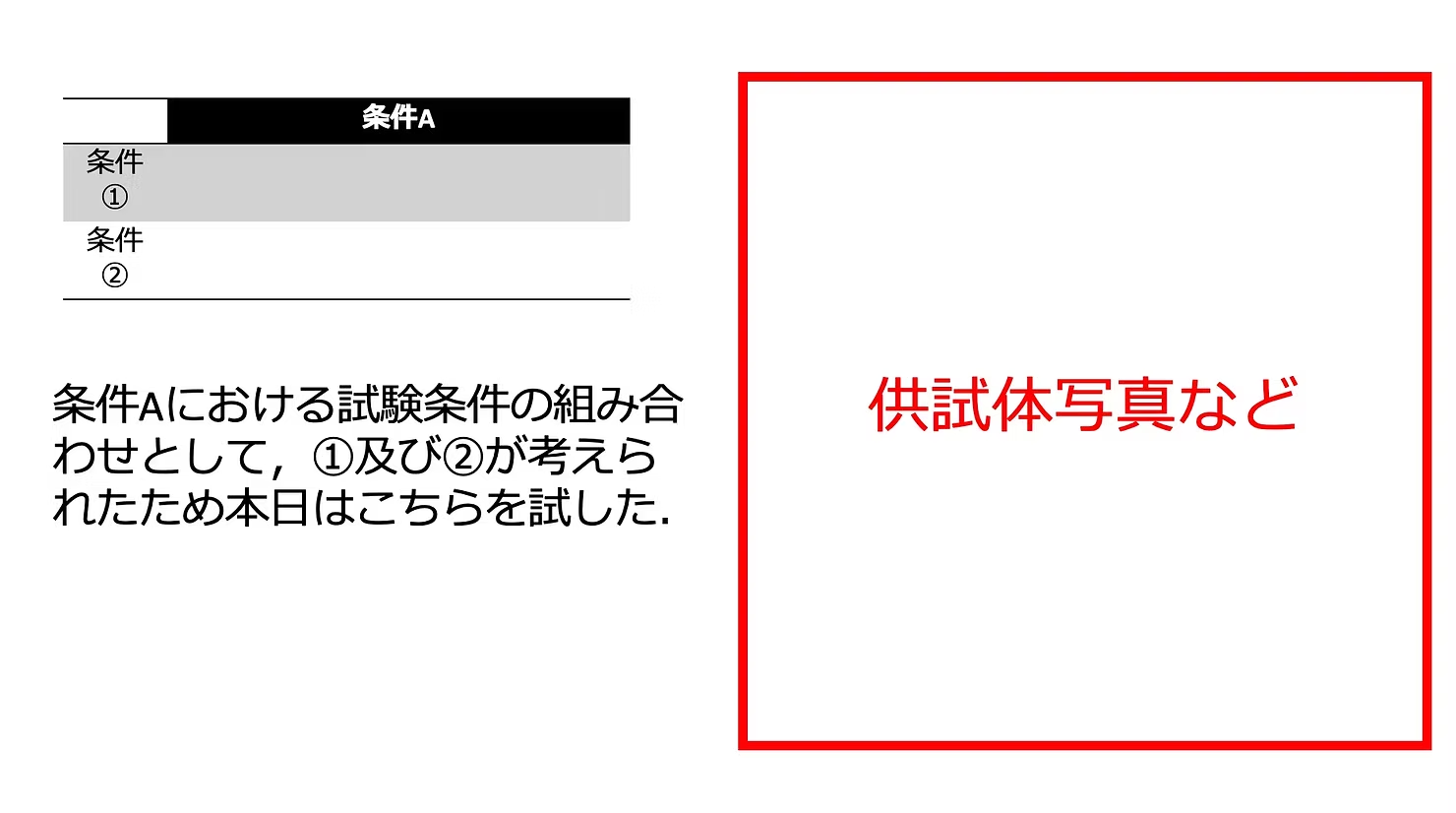
The two images above use PowerPoint-style examples; compared with earlier daily reports / logs, word count and information density are much lower. If the goal is “communicate to someone who doesn’t know,” the more formal the document becomes, the harder it is for readers — sometimes writing outside a rigid template matters more.
[Summary]
This article classified daily reports into three types:
- A list of tasks
- A history of work execution
- An explanation / report to others
Before hunting for templates, first clarify which type you are writing — the content you need will become clearer. Time spent writing is always a trade-off, but I hope you’ll consider this next time you write.